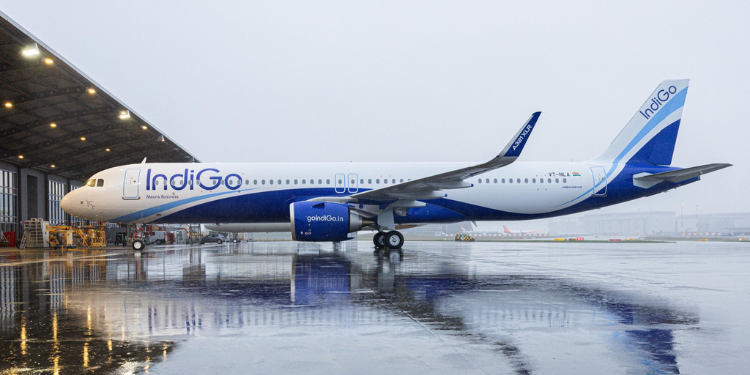

A new era of travel has just touched down in India, and it is about to change how we see the world map forever.
On January 7, 2026, the arrival of IndiGo’s first Airbus A321XLR at Delhi’s Indira Gandhi International Airport marked the beginning of a “narrowbody revolution.” This aircraft is not just another addition to a fleet; it is a specialized machine designed to fly further than any single-aisle plane in history. For Indian travelers, it means the end of long layovers in the Middle East just to reach Europe or the Mediterranean.


Here is your exhaustive guide to everything you need to know about the Airbus A321XLR and why it is the most important aircraft to enter the Indian skies this decade.
What is the Airbus A321XLR?

The Airbus A321XLR (Extra Long Range) is the latest and most capable version of the A320 family, which has been the workhorse of airlines like IndiGo for years. While most small planes are designed to fly for 3 to 5 hours on domestic routes, the A321XLR is built for the long haul.
It is a “narrowbody” aircraft, meaning it has one single aisle and two rows of seats. However, its performance puts it in the same league as much larger “widebody” jets like the Boeing 787 Dreamliner. The A321XLR can stay in the air for up to 11 hours and cover a distance of 8,700 kilometers (4,700 nautical miles) without stopping for fuel.
What is the Difference Between Airbus A321 and A321XLR?
To the untrained eye, the A321XLR looks almost identical to the standard A321neo you see at any domestic airport. However, beneath the surface, the changes are massive:
- The Fuel Tank: The standard A321 uses fuel tanks in the wings and sometimes small “auxiliary” tanks in the cargo hold. The A321XLR features a permanent, integrated Rear Center Tank (RCT). This tank is built directly into the fuselage structure, allowing it to carry 12,900 liters of extra fuel without taking up valuable cargo space.
- Maximum Weight: Because it carries so much more fuel, the A321XLR is much heavier. Its Maximum Takeoff Weight (MTOW) is 101.5 tonnes, compared to about 93 tonnes for older A321 models.
- Reinforced Structure: To handle that extra weight, Airbus strengthened the landing gear and the central part of the wings. The brakes were also upgraded to ensure the plane can stop safely at higher speeds.
- Wing Flaps: The A321XLR uses a new “single-slotted” inboard flap design. This helps the plane generate enough lift to take off from shorter runways even when it is fully loaded with fuel and passengers.
Comparison Chart: A321 Variants
| Feature | A321neo | A321LR (Long Range) | A321XLR (Extra Long Range |
|---|---|---|---|
| Max Range | 6,480 km | 7400 Km | 8700Km |
| Max Fuel | 23,340 kg | 25860 Kg | 31202Kg |
| Max Weight | 97 tonnes | 97 Tonnes | 101.5 Tonnes |
| Fuel Tank | Standard | ACT (Removable) | RCT (Permanent) |
What is Special About the A321XLR?
The most special thing about this plane is its efficiency. For years, if an airline wanted to fly from Delhi to London, they had to use a massive widebody jet with 300+ seats. If they couldn’t fill those 300 seats every day, the route would lose money.
The A321XLR changes the math. It allows airlines to operate “long-thin” routes—flights that cover long distances but have fewer passengers. It burns 30% less fuel per seat than previous-generation aircraft, making it much cheaper to fly. This lower cost allows IndiGo to offer direct flights to cities that were never reachable before for a budget carrier.
How Many Seats Are on the Airbus A321XLR?
While the A321XLR can technically fit up to 244 passengers, IndiGo has chosen a more comfortable Dual-Class Configuration for its long-haul missions.

Key Insights
- Legroom Comparison: The 31-inch economy pitch is a significant upgrade from the 28-inch pitch standard on IndiGo’s domestic A320/A321 fleet.
- Premium Features: The IndiGoStretch cabin occupies the first three rows of the aircraft. These Recaro R5 seats include enhanced ergonomic features such as adjustable headrests and optimized cushioning for long-duration travel.
- Amenities: Every seat in both cabins is equipped with a universal power adapter and USB-C/USB-A charging ports, as well as integrated device holders for the Bluebox digital streaming entertainment system.
- Operational Trade-off: By reducing the total seat count to 195 (compared to the 222–232 seats on their standard A321neos), IndiGo is able to maintain the weight limits necessary to achieve the aircraft’s full 8,700 km (4,700 nm) range.
A321XLR vs. Other Airbus varients (Narrow body type)
A321XLR against other key models in the Airbus narrowbody families. While the A319, A320, and standard A321 are designed for regional and medium-haul missions, the A321XLR extends narrowbody range into the long-haul market.
| Model | Aircraft type | Seating | Maximum Range | Max Takeoff Weight (MTOW) in tonnes |
|---|---|---|---|---|
| Airbus A319 | Narrow Body | 156 seats | 6,950 Km | 75.5 |
| Airbus A320 | Narrow body | 180 seats (ceo) / 194 seats (neo) | 6,300 Km | 79 |
| Airbus A321 | Narrow body | 244 seats | 7,400 Km | 97 |
| Airbus A321XLR | Narrow body | 244 seats | 8,700 Km | 101.5 |
IndiGo’s Big Bet: Orders and Routes
IndiGo’s commitment to the A321XLR is massive, reflecting its ambition to move from a domestic powerhouse to a global airline.
- Order Count: IndiGo has a firm order for 40 A321XLR aircraft. Some reports suggest the airline’s total commitment for the A320 family (including conversions) could involve up to 69 XLR units.
- Delivery Schedule: Nine A321XLRs are expected to be delivered within the 2026 calendar year.
- International Routes (2026):
- Mumbai to Athens: Starting January 23, 2026 (3x weekly).
- Delhi to Athens: Starting January 24, 2026 (3x weekly).
- Upcoming: Flights to Istanbul (Turkey) and Denpasar (Bali) are expected later in 2026 as more aircraft arrive.
- Future Expansion: The airline is eyeing more destinations across Europe and East Asia.
How Pilots Benefit: Ease and Innovation
Pilots are welcoming the A321XLR because it builds on a familiar and highly reliable platform.
- Shared Training: The A321XLR shares the same “Type Rating” as the rest of the A320 family. Pilots who already fly for IndiGo only need a short “differences course” to transition to the XLR.
- e-Rudder: It features an electronically signaled “e-Rudder,” which makes the flight control system more advanced and consistent with larger planes like the A350.
- Landing Performance: Pilots have noted that the A321 series often “lands nicer” and feels more stable during the flare (the final moments before touchdown), especially when the aircraft is heavy with fuel.
- Operational Ease: The cockpit is nearly identical to the A321neo, reducing the chance of error and making it easy for pilots to move between domestic and long-haul duties.
A231xlr Maintenance Services in India
India is rapidly becoming a global hub for aircraft maintenance. For the A321XLR, there are several key services:
- Bengaluru Mega-MRO: IndiGo is currently constructing a massive 31-acre Maintenance, Repair, and Overhaul (MRO) facility at Kempegowda International Airport (BLR). Scheduled for early 2028, it will feature 12 aircraft bays and be capable of handling heavy maintenance for the A321XLR and future A350 fleets.
- Thales Avionics Hub: IndiGo signed an 11-year contract with Thales to maintain avionics components. This will be supported by a new state-of-the-art facility in Gurugram, near the Delhi airport.
- AIESL: Air India Engineering Services Ltd (AIESL) remains the largest MRO in India, providing base and line maintenance for the A320 family across major hubs like Mumbai and Delhi.
Past Issues and Resolutions
No new aircraft is without its growing pains. The A321XLR and its A320 family members dealt with two specific technical hurdles in late 2025:
- Solar Radiation Glitch: Investigators found that intense solar radiation (like solar flares) could corrupt data in certain versions of the flight control software. Airbus issued a global recall for 6,000 aircraft to update the software. By December 2025, the vast majority of the fleet, including the new XLRs, had been fixed and returned to service.
- Metal Panel Quality: A supplier provided some front fuselage panels that had thickness discrepancies. While it did not compromise safety, Airbus inspected over 600 jets to ensure they met high quality standards. The issue has since been fully resolved.
What Can Consumers Look Forward To?
If you are planning to fly on the A321XLR, here is what the passenger experience will look like:
- Digital Entertainment: IndiGo has partnered with Bluebox to provide a streaming inflight entertainment system. You can watch movies, TV shows, and games on your own smartphone or tablet.
- In-Flight Wellness: The “Airspace” cabin features 60% larger overhead bins (Airspace XL), advanced LED mood lighting to reduce jet lag, and a quieter cabin environment.
- Dining: Expect complimentary hot meals and beverages on these long-haul routes. Vegetarian meals are the default, but you can pre-book non-vegetarian options.
- Lower Cabin Altitude: The aircraft can maintain a cabin pressure equivalent to 6,000 feet while flying at 33,000 feet, which reduces headaches and fatigue during long 8-to-11-hour flights.
What Aviation Leaders Are Saying
For India, the A321XLR is seen as the primary tool for a “narrowbody revolution” that will connect Indian cities directly to Europe and East Asia.
- Pieter Elbers (CEO, IndiGo): Elbers has described the arrival of the XLR as a “symbolic milestone of India’s aviation ascent.” He emphasized that the aircraft’s advanced capabilities enable the airline to “reach newer regions across the globe” and strengthen India’s position as a key player in international aviation.
- Jürgen Westermeier (President & MD, Airbus India): Westermeier views the aircraft as a “catalyst for IndiGo’s international growth.” He stated that the XLR acts as a “bridge,” linking Indian cities to previously unreachable destinations and supporting India’s ambition to become a “global aviation hub.”
- K. Ram Mohan Naidu (Union Civil Aviation Minister): While focusing on the broader industry, the Minister highlighted that India’s aviation market is entering a phase of “unprecedented growth.” He noted that the country’s fleet is expected to expand to 3,500–4,000 aircraft in the next two decades, with long-range narrowbodies playing a critical role in this expansion.
Conclusion
The Airbus A321XLR is more than just a new plane, it is the catalyst for a more connected India. By combining the low costs of a narrowbody with the range of a widebody, it allows IndiGo to offer long-haul travel at prices more people can afford. As the airline rolls out its network to Athens, Istanbul and beyond, the A321XLR is set to become the definitive workhorse of India’s international expansion for the next decade.