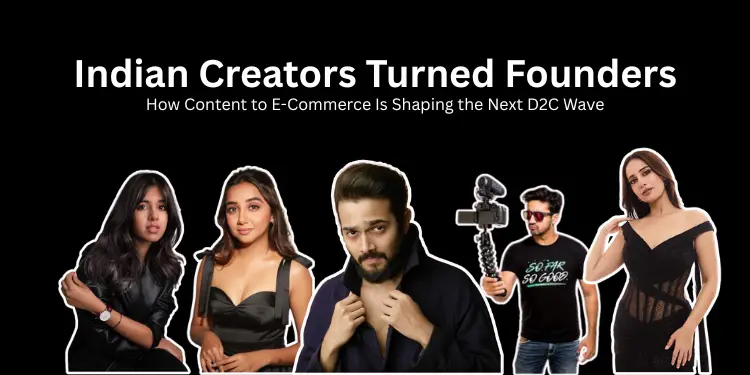
Indian Creators are no longer just people who make funny reels, vlogs, or dance clips. Across India, creators are becoming founders by turning their passion, community, and influence into real businesses and brands. From selling their own products to building full-fledged companies, these digital storytellers are now shaping India’s Direct-to-Consumer (D2C) wave — where commerce grows directly from content and community.
The Indian creator economy has been growing rapidly, with millions of creators influencing millions of consumers and billions in commerce spending. This blog explores some real examples of creators who have moved from creating content to building products and businesses, with clear facts and examples for readers of all ages.
Table of Contents
Case Studies: Indian Creators Turned Founders
Below are examples of Indian creators who didn’t just make content — they built brands and enterprises.
1. Kusha Kapila – Underneat (Shapewear)
Kusha Kapila is a popular Indian digital creator known for her relatable humour and strong social media voice. In 2025, she co-founded Underneat, a D2C shapewear brand. The brand’s focus on body positivity and inclusive fits attracted investor attention and according to Times Entertainment it raised over ₹54.5 crore funding as it scaled operations in India.
Related Post


Her journey shows how a creator’s authentic personality can align with a specific product market and build serious business momentum.
How Good Marketing Helped
- Leveraged Instagram reels and community conversations.
Implication: Emotional branding combined with social media reach helped Underneat gain quick visibility and investor confidence. - Used Kusha’s strong personal brand and relatability.
- Focused on body-positive storytelling instead of just product selling.
2. Prajakta Koli – Merch Garage (Merch Brand)
Prajakta Koli, also known as MostlySane, is one of India’s most celebrated lifestyle and comedy creators. She launched Merch Garage, a merchandise brand that includes T-shirts, diaries, and keepsakes that reflect her creative personality. Her merchandise connects her community of fans with products that feel personal and meaningful.
This case shows how creators can build a brand identity that resonates with loyal followers.
How Good Marketing Helped
- Sold merchandise through emotional fan engagement.
- Used YouTube and Instagram to announce product drops.
- Turned followers into brand ambassadors.
Implication: Community marketing can outperform paid ads when trust is high.
3. Mumbiker Nikhil – Label MN (Apparel Brand)
Motorcycle vlogger Nikhil Sharma, better known as Mumbiker Nikhil, turned his love for adventure into a fashion brand called Label MN. The brand creates apparel that echoes his road-trip lifestyle and connects directly with his community of travel and biking fans.
Creators with strong niche communities can take their passions to commerce by selling lifestyle products that reflect their unique identity.
How Good Marketing Helped
- Promoted apparel organically through travel vlogs.
- Positioned clothing as part of biker identity.
- Used storytelling around adventure and lifestyle.
Implication: Lifestyle integration is a powerful marketing strategy for Indian Creators.
4. Bhuvan Bam – Youthiapa (Merch & Fashion)
Bhuvan Bam, one of India’s earliest YouTube stars, expanded beyond videos by co-founding Youthiapa, a merchandise and fashion label. His brand started with merchandise inspired by his comedy characters and grew into everyday clothing that his large audience enjoys.
This shows how early content success can evolve into a brand that carries forward the creator’s personal story in product form.
How Good Marketing Helped
- Integrated product launches inside YouTube content.
- Used character-driven storytelling to connect merchandise with fans.
- Leveraged limited drops to create demand.
Implication: Content-driven product marketing reduces customer acquisition cost and builds loyal repeat buyers.
5. Sejal Kumar – Sejal Merch (Merch & Accessories)
Sejal Kumar, a fashion and lifestyle content creator, launched her own branded merchandise Sejal Merch that includes apparel, accessories and lifestyle goods. Her brand appeals to her fan base that loves her style choices and creative content.
Her example illustrates how fashion creators can transition from recommendations to owning products.
How Good Marketing Helped
- Focused on aesthetic branding.
- Used consistent Instagram visuals.
- Leveraged fashion tutorials to subtly promote products.
Implication: Visual branding and content consistency build strong recall value.
Here’s Key Questions Frequently asked
What is the Indian creator economy market size?
India’s creator economy is estimated to be around $12 billion in 2025 and is expected to grow significantly in the coming years. This includes creators who make money through ads, sponsorships, and commerce.
How many content creators are in India?
India has an estimated 2 – 2.5 million monetised content creators influencing brands and commerce. This includes people who make money from their content on platforms like YouTube, Instagram, and others.
How many have turned from content creator to founder?
There isn’t an exact number, but hundreds of creators across India have launched their own D2C brands or products — from apparel and wellness to merchandise and lifestyle goods — showing the clear trend of content-to-commerce evolution.
How are creators leveraging their niche communities?
Creators use their direct relationships with followers to launch products that match their niche — for example, fashion merchandise, lifestyle products, or performance gear — turning trust and engagement into direct sales and long-term businesses.
Which niche is the best for creators in India?
Some of the strongest niches where creators are turning founders include:
- Fashion & Apparel (like Label MN, Youthiapa)
- Lifestyle & Merchandise (like Merch Garage, Sejal Merch)
- Wellness & Body Positivity (like Underneat)
These niches work well because they connect closely with the creator’s own content and community interests.
Summary
Indian Creators are redefining influence by turning their personal brands into D2C businesses. They start with content, build engaged communities, and then introduce products or services that reflect their audience’s identity and trust. Today, creators are not just entertainers — they are entrepreneurs shaping the future of commerce in India, powered by social media and direct audience connection.
Read Next : 40 Years of Piyush Pandey: Stories, Pitches and the Ads That Stuck