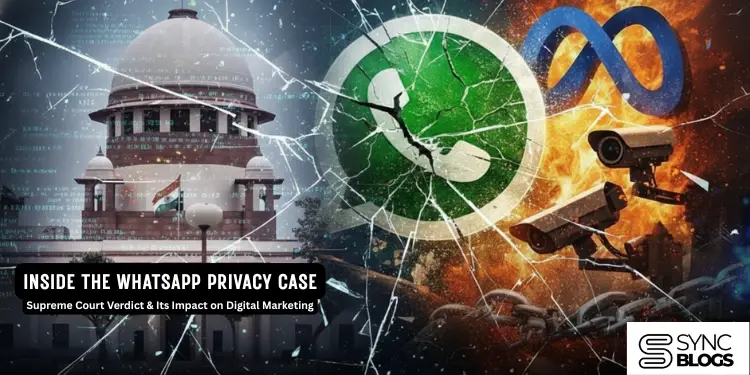
In recent days, the news has been filled with big headlines about two of the world’s most famous apps: WhatsApp and its parent company, Meta (which also owns Facebook and Instagram). The WhatsApp Privacy Policy case has reached a boiling point, and the judges in India are asking very tough questions about how our personal information is handled.
Have you ever felt like your phone is listening to you? One minute you are talking about a new pair of shoes, and the next minute, an ad for those exact shoes pops up on your screen. This is exactly why the WhatsApp Privacy Policy Supreme Court India case has become a massive legal battle, with judges accusing tech giants of taking our data without giving us a fair choice.
Table of Contents
Why the Supreme Court is Upset Over the WhatsApp Privacy Policy Supreme Court India
Imagine you want to enter a public park, but the guard says, “To come inside, you must let me read your mail and tell all the shops what you like.” You would feel trapped because that is the only park in town. This is what the Supreme Court calls a “take-it-or-leave-it” policy.
Because almost everyone in India uses WhatsApp to talk to teachers, bosses, and family, the court believes users are being forced to give up their privacy just to stay connected.
According to The Hindu, the Supreme Court recently described WhatsApp’s data practices as a “decent way of committing theft of private information” by collecting user data under the guise of a free service.
The Implication: This means the court no longer views data sharing as a “choice” for users. If the court rules against Meta, the company may be forced to completely separate WhatsApp data from Facebook and Instagram, stopping them from tracking your habits across different apps.
Related Post


What’s Changing?
The main thing changing is the “power” the app has over your data. For years, the app could share info with Facebook and Instagram to show you ads.
- The “Undertaking”: The Court has asked for a formal promise that Indian users won’t be forced to share data with other apps.
- Metadata Protection: While your texts are locked, the “metadata” (who you call and when) is now being treated as private property.
- The DPDP Act: New rules like the Digital Personal Data Protection Act are being used to make sure companies ask for your permission every time they want to use your info.
How it Could Impact Your WhatsApp Marketing
If you are a business owner, the WhatsApp Privacy Policy Supreme Court India ruling might change how you find customers.
- No More “Shadow Tracking”: You might not be able to target people based on what they do on Facebook as easily as before.
- Verified Lists Only: You will likely need to prove that every person on your broadcast list actually asked to be there.
- Higher Costs: If the “free” data sharing stops, the cost of sending business messages might go up to cover the platform’s expenses.
Which Alternatives and Strategies Could Emerge Next?
As the rules get tougher, smart marketers are already looking for new ways to reach people without being “creepy.”
- Signal for Business: Since Signal collects almost zero data, it is becoming a “safe haven” for private consultations.
- RCS Messaging: This is like SMS but with pictures and buttons. It works directly through the phone’s texting app, not a social media company.
- First-Party Data: Instead of relying on WhatsApp to “find” customers, businesses will start asking for phone numbers on their own websites to build their own private lists.
The Future of Marketing Under the WhatsApp Privacy Policy Supreme Court India Guidelines
The future is moving toward “Permission-Based Marketing.” This means instead of a brand chasing you, you choose to follow the brand.
According to Forbes, permission marketing builds a much stronger bond between a customer and a business because it is based on trust, not tracking.
The Implication: Marketing will become “human” again. Instead of annoying ads that follow you around, you will get helpful messages from brands you actually like because you gave them the key to your inbox.
What Happens if WhatsApp Exits India?
The ongoing WhatsApp Privacy Policy Supreme Court India legal battle has raised a shocking question: Could the world’s most popular messaging app actually leave its biggest market? In February 2026, the Supreme Court sent a clear message to Meta: “Follow our Constitution or exit India.” If this were to happen, it would be like a “digital earthquake” for the country.
1. The Communication Breakdown
For many people in India, WhatsApp is not just an app—it is a vital tool for daily life.
- Family and Friends: Millions of families would lose their primary way to stay in touch, especially those who rely on simple video calls.
- Education: Schools and colleges use WhatsApp groups to send homework and exam dates. Without it, students and teachers would have to find a brand-new way to coordinate.
- Government Services: Even some government offices use WhatsApp to help citizens. An exit would slow down these services.
2. A Major Hit to Small Businesses
WhatsApp is the “digital storefront” for millions of small shops and street vendors across India.
According to The Economic Times, nearly 90% of consumers in smaller Indian cities use WhatsApp as their primary platform to find brands and make purchases.
The Implication: If WhatsApp exits, small businesses would lose their direct connection to customers. They would have to pay more for SMS or complex websites, which could hurt their profits and slow down the local economy.
3. The Shift to “Made in India” Apps
Every problem creates an opportunity. If WhatsApp leaves, Indian-made apps would likely take its place.
- Arattai by Zoho: A privacy-focused app made in Chennai that is already growing fast.
- JioChat: A local alternative that could easily handle millions of users.
- Global Alternatives: Apps like Signal and Telegram would also see a massive spike in Indian users looking for a new “digital home.”
FAQ: Your Rights and the Law
What was the Supreme Court ruling on messaging app privacy in India?
As of February 2026, the Court has given a judicial ultimatum to Meta. They have stated that they will not allow the “exploitation” of even a single citizen’s data and have asked the company to file a formal promise (undertaking) to stop sharing user data for ads.
Latest updates on the privacy policy case involving major messaging apps
The case is currently ongoing in February 2026. The Supreme Court has recently impleaded the Ministry of Electronics and Information Technology (MeitY) to see how the new Digital Personal Data Protection (DPDP) Rules apply to this case.
How does the Supreme Court decision affect encrypted chat services?
While your actual words in a message stay locked (encrypted), the “metadata”—like who you call and how long you talk—is what the Court wants to protect. They want to ensure this data isn’t used to build a “profile” of your life.
Impact of court rulings on user data sharing practices by online communication services
Rulings are moving toward “Data Minimization.” This means apps should only collect what they absolutely need to send your message, nothing more.
Where can I find the official Supreme Court judgment on instant messaging apps?
You can search for official orders and final judgments on the Supreme Court of India Judgment Search Portal.
Can I still use end-to-end encrypted messaging apps after the Supreme Court ruling?
Yes! You can still use these apps. The Court is not trying to ban them; it is trying to make sure the companies don’t use your personal information as a “hidden charge” for a service they claim is free.
How do court directives affect features in popular encrypted communication apps?
Directives may force apps to include an “Opt-Out” button that is easy to find, so you can stop data sharing without losing your account.
Which messaging companies comply with the Supreme Court guidelines on data sharing?
Apps like Signal and Threema are already following these privacy-first rules. They do not share your data with third parties for ads.
What are my rights regarding data privacy on widely used chat applications?
Under the Indian Constitution, you have a “Fundamental Right to Privacy.” This means you have the right to know what data is being collected and to say “No” to it being sold.
Key Takeaways
- The Ultimatum: The Supreme Court has told Meta to stop sharing data for ads or risk being asked to leave India.
- The “Theft” Comment: Judges believe taking data for ads without a real choice is like “theft.”
- Equality: The Court wants Indians to have the same high privacy standards as people in Europe.
- Metadata Matters: It’s not just about reading your texts; it’s about who you talk to and when.
- Business Shift: Marketing will move toward “permission-based” models where you choose what you see.
- Economic Impact: Small businesses would face the biggest struggle, as they rely on the app for daily orders.
- Data Sovereignty: The Court believes that protecting Indian citizens’ privacy is more important than keeping a foreign app.
- Rising Stars: An exit would likely boost Indian apps like Arattai and JioChat.
Summary
The WhatsApp Privacy Policy Supreme Court India debate is a landmark fight for digital freedom. The Court is standing up to big companies to ensure that “free” apps don’t come at the cost of our personal secrets. As the law catches up with technology, users can expect more control over their information and fewer “Stalking” ads following them around the internet.